Overall Basic 5G Network Structure
Introduction
The 5G network architecture is designed to provide a reliable high-speed, low-latency wireless connectivity source. When looking at the basic overall 5G network structure, at its core, it consists of three main components.
User Equipment
Also referred to as UE’s, these are the end-user devices typically used to establish a connection or access the network. They serve the role of enabling users to access high-speed wireless communication as well as other advanced applications and services. Some common examples of UE’s include laptops, smartphones, desktop computers, or any device that can connect to the network through wireless communication technologies such as Wi-fi and cellular data. Refer to page: “User Equipment” for more information.

This picture depicts sample user equipment (UE)
Radio Access Network
The radio access network, or RAN, is the component that links the user equipment to the core network (a component that is mentioned below). It consists of a network of base stations, or radio access nodes, communicating with the aforementioned user equipment using radio frequencies. UE’s can be provided wireless connectivity by transmitting and receiving radio signals through the radio access network. Some of the functions performed by the RAN include radio transmission and reception, signal processing, resource management, and security. Refer to page: “Radio Access Network” for more information.
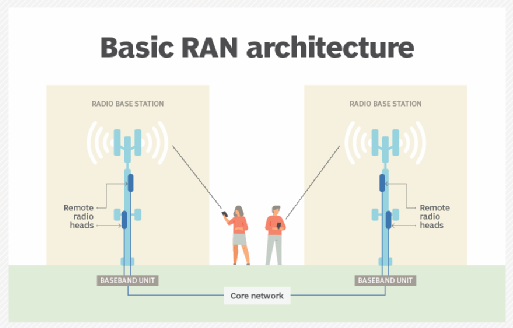
This picture depicts basic RAN architecture
Core Network
The core network or mobile core is a critical component of a 5G network in the sense that this component is responsible for connecting the radio access networks to other external networks, such as the internet, and provides connectivity between different RAN nodes. The core network is also responsible for providing services such as authentication, routing of user traffic, and authorization.
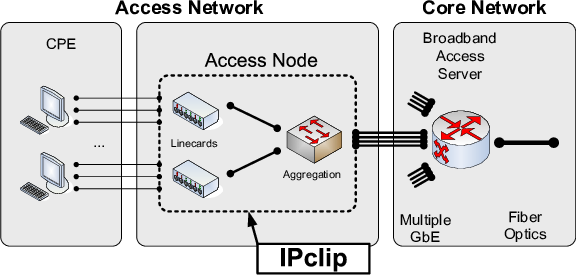
This picture depicts core network architecture